

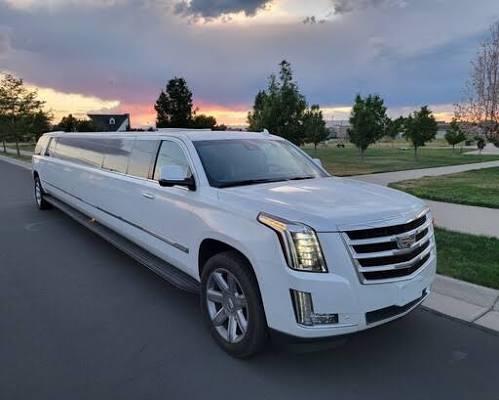
"Chauffeur Service Bracknell " and "taxi" get used almost interchangeably in everyday conversation, but in a town like Bracknell — dense with corporate headquarters, business parks, and a steady flow of executives and international visitors — the distinction is a real one, not a marketing label. This piece explains what actually separates the two, why Bracknell's specific geography shaped the demand for chauffeur services in the first place, and how to judge whether you actually need one.
Why Bracknell Specifically Built This Kind of Demand
Bracknell's position along the M4 corridor put it inside what's often called the UK's Thames Valley tech and business belt — a concentration of corporate offices, business parks, and multinational operations that's unusually dense for a town its size. Sites like Arlington Business Park and the Western and Southern industrial areas host a steady flow of corporate staff, client visitors, and international executives, all of whom need transport that behaves predictably rather than transport that's simply available.
That corporate density is the real driver behind Bracknell's chauffeur market, more than the town's retail or residential profile. A visiting executive flying into Heathrow for a meeting at a Bracknell business park doesn't just need a ride — they need a driver who knows the specific building, the parking arrangement, and how much buffer time the route actually requires at a given hour.
What a Chauffeur Service Actually Provides That a Standard Taxi Doesn't
The functional differences are worth spelling out plainly, because the two are often priced closer together than people expect:
-
A named, consistent driver rather than whoever's available on a rota — useful for regular commuters or corporate accounts where familiarity with preferences and routine matters.
-
Vehicle presentation as a standard, not a variable. Chauffeur fleets are typically maintained to a consistent premium standard — executive saloons or larger vehicles kept to a specific presentation level — rather than the more variable condition you'd find across a general taxi fleet.
-
Route and timing planning done in advance, including live traffic monitoring, rather than a driver working reactively once the journey has already started.
-
A quieter service standard. Professional chauffeurs are generally trained to let the passenger set the tone of the journey — silence, conversation, or a working environment — rather than defaulting to conversation.
-
Fixed, distance-based pricing agreed before the journey, removing the uncertainty of a metered fare responding to traffic conditions along the way.
None of this makes a standard taxi worse at what it does — for a short, straightforward local trip, a taxi is often the simpler and cheaper choice. The chauffeur model earns its premium specifically on longer journeys, business-critical timing, or situations where consistency matters more than the base fare.
The Regular Commute: An Underused Case for Chauffeur Service
One of the less obvious applications, and increasingly common among Bracknell's corporate residents, is the daily or weekly commute into central London. For professionals who travel to London regularly, a fixed-price chauffeur arrangement functions as a genuine alternative to rail season tickets or self-driving — the car becomes a predictable, working environment rather than dead commuting time, and the cost comparison against rail plus taxi legs at both ends is often closer than people assume.
Businesses with frequent traveling staff or client-facing roles have increasingly formalized this into corporate accounts — monthly invoicing, a dedicated point of contact, and consistent drivers who already know a client's preferences and requirements without needing to be briefed each time.
Occasions Where a Chauffeur Genuinely Changes the Experience
-
Client and VIP collection. First impressions for visiting clients or executives are shaped heavily by the transport experience — a chauffeur waiting with a name board and a well-presented vehicle sets a different tone than a standard taxi rank pickup.
-
Airport transfers with tight timing. Business travel rarely allows for uncertainty; live flight tracking and pre-planned routing reduce the single biggest failure point in corporate airport pickups — a missed or delayed connection at the terminal.
-
Weddings and formal occasions. The same standards that suit a corporate client — presentation, punctuality, discretion — translate directly to significant personal occasions where the journey itself is part of the day.
-
Multi-stop business itineraries. For a day involving several meetings across different sites, a chauffeur who stays with the itinerary throughout removes the friction of re-booking transport between each stop.
How to Evaluate a Bracknell Chauffeur Provider
-
Confirm licensing specifics, not just a general claim of professionalism — private hire licensing and insurance appropriate for the vehicle class matters more here than branding.
-
Ask how routes are planned for known local complexities — Bracknell's business park layout and the M4/M3/M25 approaches all have known congestion patterns at particular times, and a provider genuinely familiar with the area should be able to speak to this specifically rather than generically.
-
Check whether pricing is genuinely fixed for the full journey, including any waiting time built into a multi-stop itinerary, rather than becoming variable once traffic or an extended meeting changes the plan.
-
For regular use, ask about account structure — consolidated billing, priority booking, and consistent driver assignment are the features that make a genuine difference for frequent corporate use, beyond the individual ride experience.
Final Thoughts
The Chauffeur Service Bracknell distinction in Bracknell isn't really about luxury branding — it's about which journeys actually benefit from planning, consistency, and a driver who treats the route as known territory rather than a one-off trip. Given how much of Bracknell's transport demand comes from its business park density and executive traffic, that distinction shows up in practice more often here than in a typical commuter town — making it worth understanding before defaulting to whichever option is quickest to book.

 English
 French
 Spanish
 Portuguese
 Deutsch
 Turkish
 Dutch
Dutch
 Italiano
 Russian
 Romaian
 Portuguese (Brazil)
 Greek
Greek